Seven Rivers Favorites
The era of Seven Rivers Railroad is the history of early American steam locomotion. I built a diorama in a shoe box as a grade school project long before my first layout. It featured a diminutive and colorful 4-4-0, which I might have seen in a picture or museum.
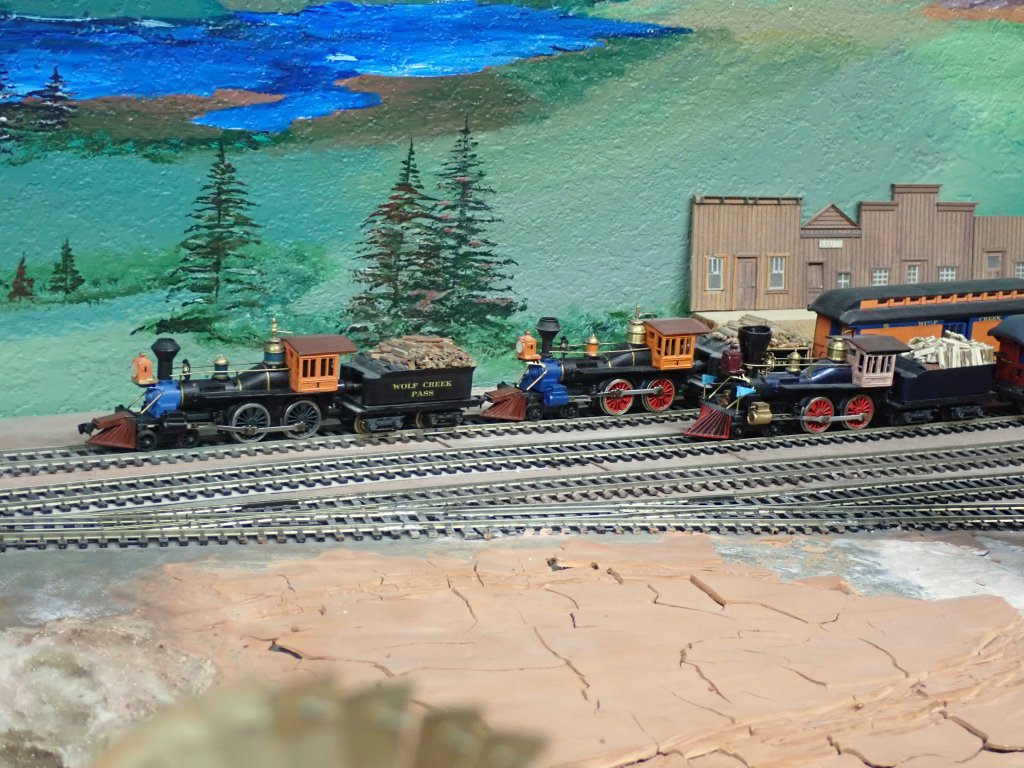
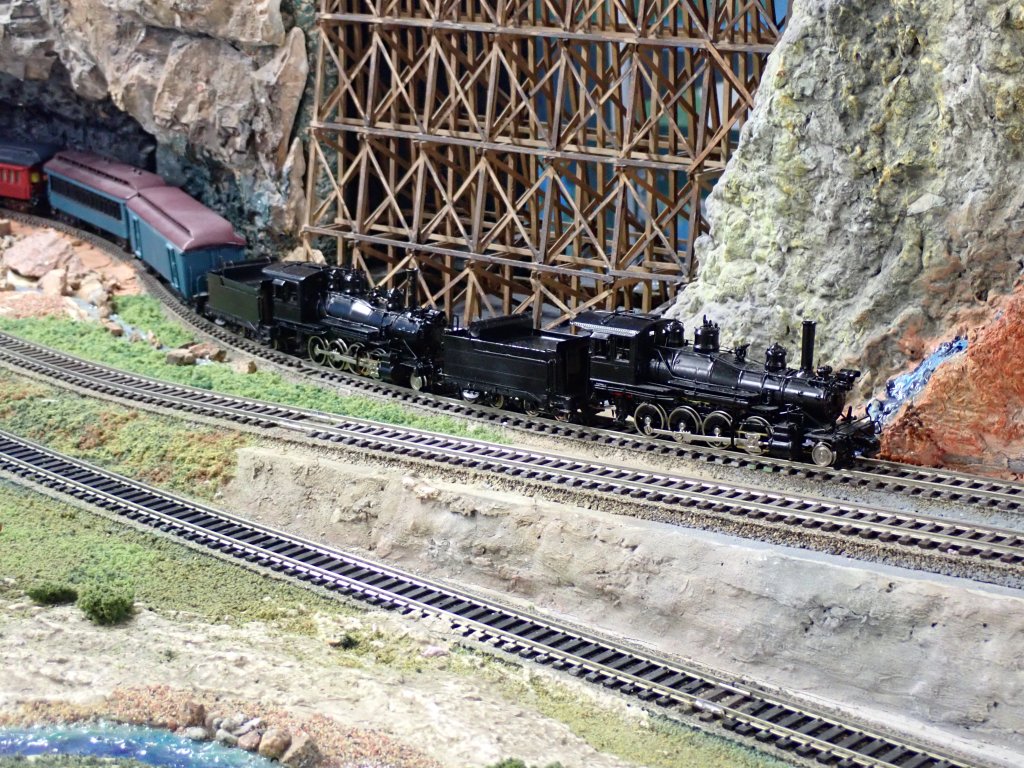
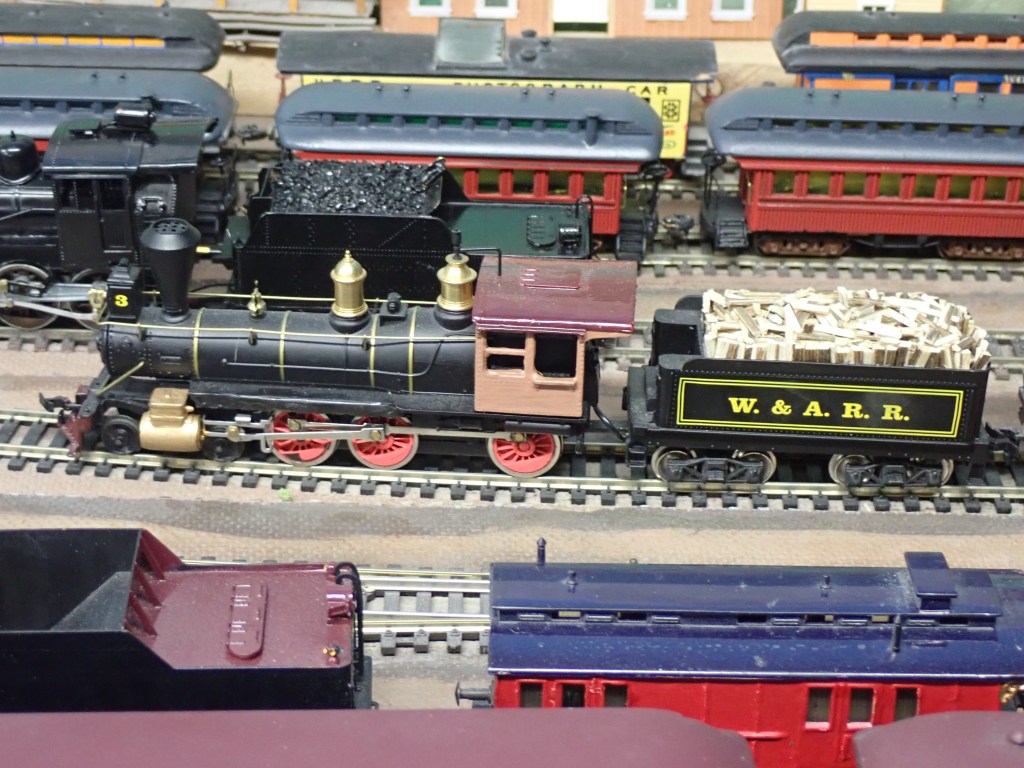
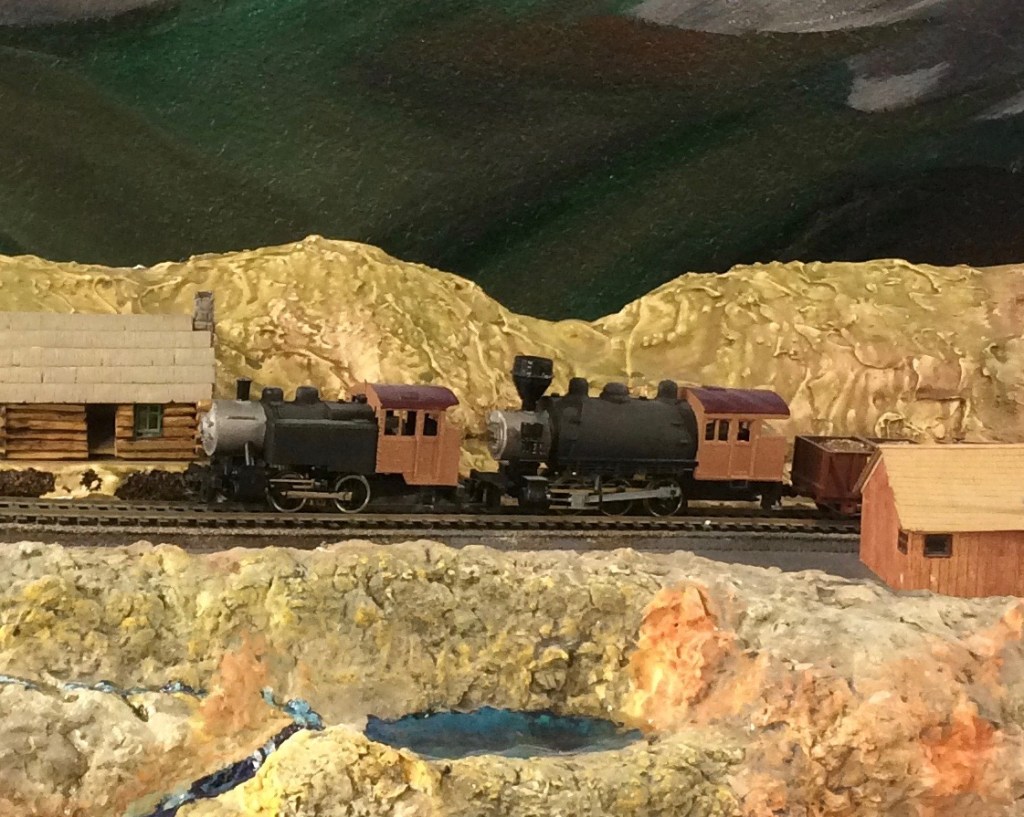
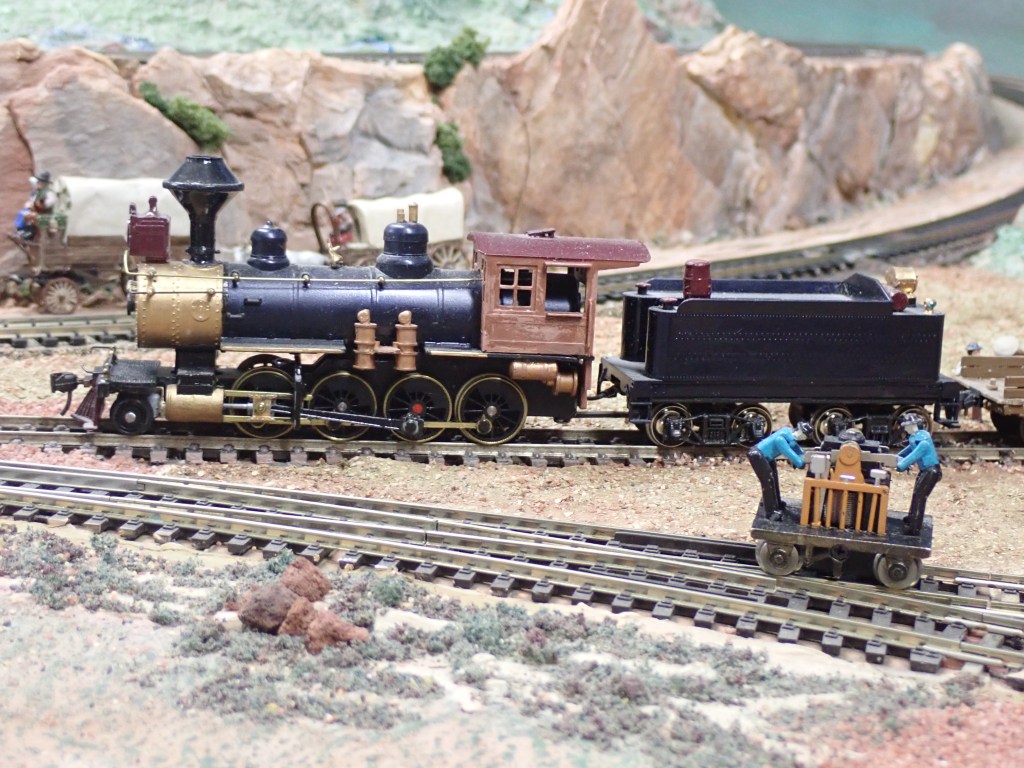
On the left are two Tyco Generals built by Don and a third which was my very first kit built locomotive. Below the trestle double headed Consolidations from Key Imports haul a heavy train up a steep grade. The ten wheeler on the right is a Rogers, built by Mantua, with my paint job and wood load. Roundhouse kit built locomotives perform reliable service for mining, lumber and maintenance trains.
Bowsers
I dreamed of someday building my own steam locomotive, but by the time I got around to it, the Bowser kits I had admired at Caboose Hobbies in Denver had been discontinued. When I discovered they came up for resale on eBay, I got my chance. Now I’ve built ten of them. They have a unique growl, similar to the PFM imports, but they are reliable and will pull heavy trains when built properly.
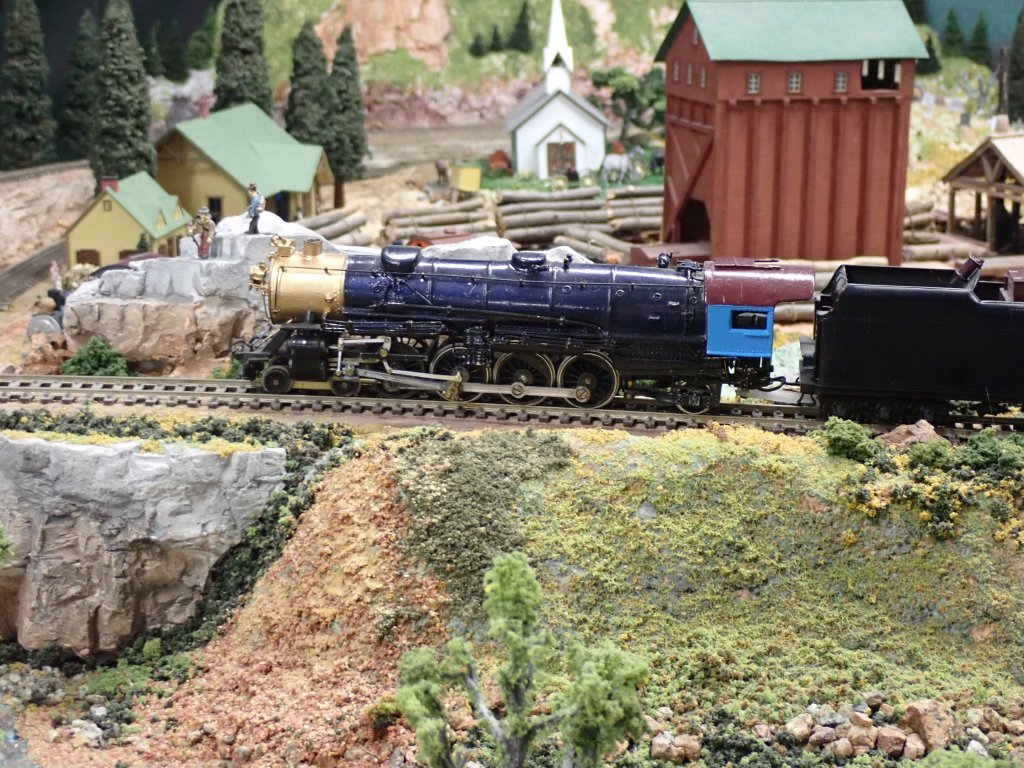
Two climbers admire a Bowser Mountain 4-8-2 as it passes Colter Point. This is the largest locomotive used for regular service on Seven Rivers, hauling the Blue Spruce Train.
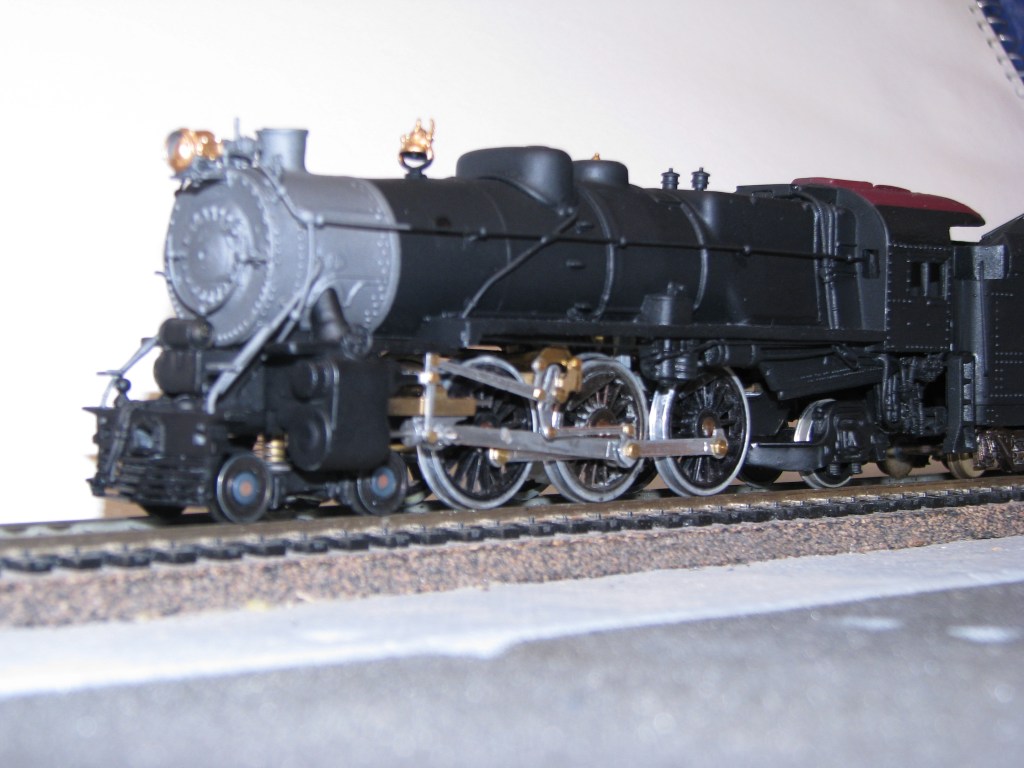
Here is my K4 Pacific, which can also haul the Blue Spruce Train.
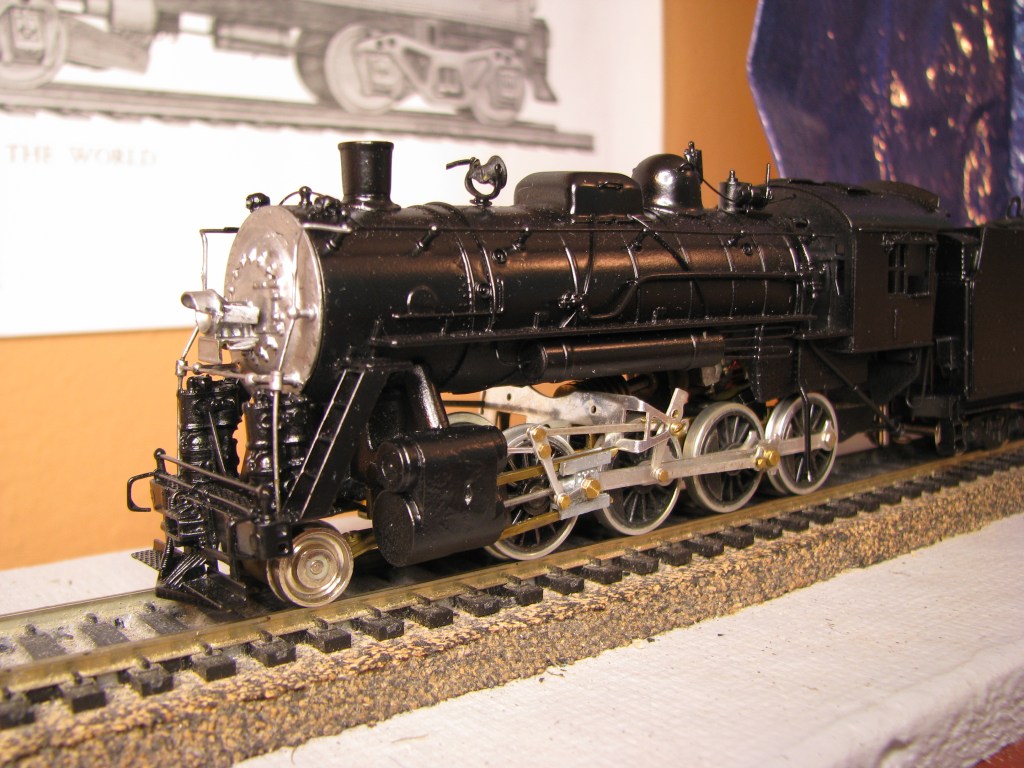
The fine craftsmen at Dong Jin in Korea created some highly detailed and extraordinarily accurate models for Hallmark. Pictured above is a Hallmark consolidation / Bowser hybrid. The frame, motor, drivers and mechanisms are all Bowser, and the boiler, cab and phenomenal detail are brass modeled by Hallmark. I’ve done a couple of hybrids, and they are smooth and reliable runners on Seven Rivers.
Brass
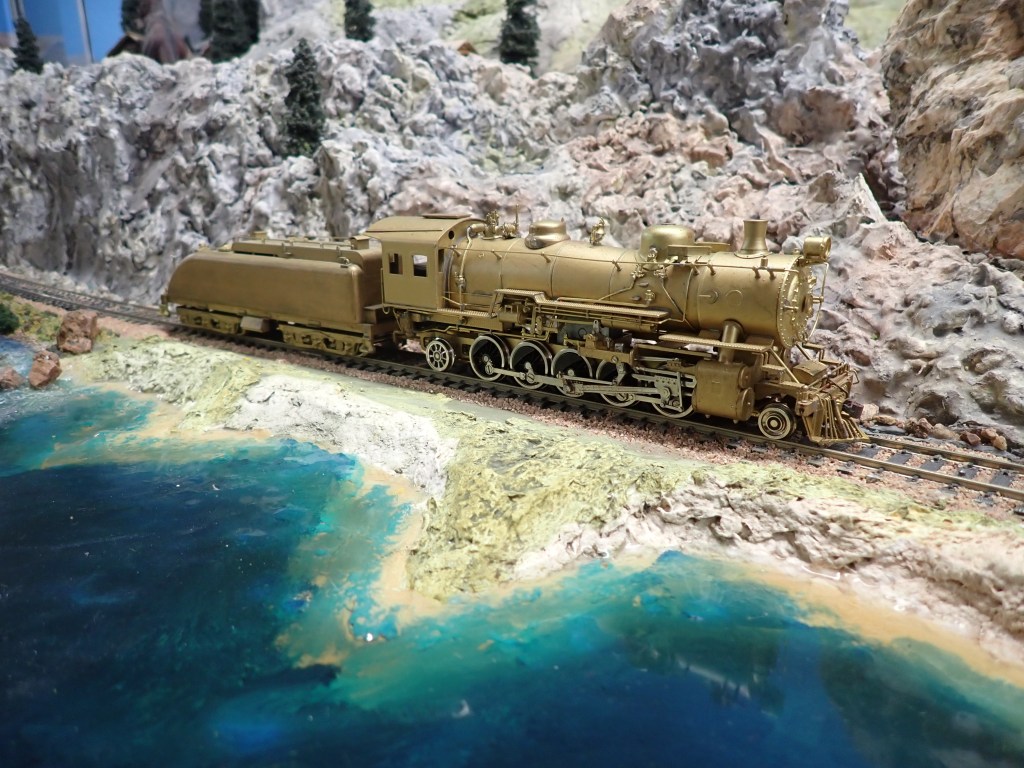
Beginning in the early 60’s there was a surge of model building by fine Korean and Japanese craftsmen, whose work was imported to the states by Pacific Fast Mail, Westside, Hallmark, Sunset and many others. By the mid 80’s prices had increased so much that many importers cut back or stopped importing entirely. Current imports are out of my league, but I continue to search through the lists of re-sellers for affordable examples from the Golden Age of Brass. eBay has been a great source, but it requires vigilance to look at the lists regularly. I am especially interested in the small locomotives of the 1890’s or earlier. Although I prefer to run my kit built locomotives on Seven Rivers for regular service, my brass locos are hardly shelf queens. They are examples for my own detailing, I love to study their histories, and they all get to run now and then on Seven Rivers, (a perfect testing ground for these sometimes feisty models.) I enjoy servicing them on a regular basis. I have put new motors and gearing in some, thanks to the good people at Northwest Short Lines.
 Seven Rivers Railroad